


TYGES International releases a state-by-state analysis of BCBA workforce shortages exposing a nationwide autism care crisis and calls for urgent action.
WILLIAMSBURG, Va., Apr. 15, 2026 /PRNewswire/ — Across the U.S., families with autistic children are waiting months for ABA therapy — not because services don’t exist, but because there aren’t enough Board-Certified Behavior Analysts (BCBAs) to provide them. Families encounter empty waiting lists, hundred-mile drives, and in many cases, no qualified provider at all within reach. These communities have a name: ABA care deserts. And they are far more widespread than most people realize.
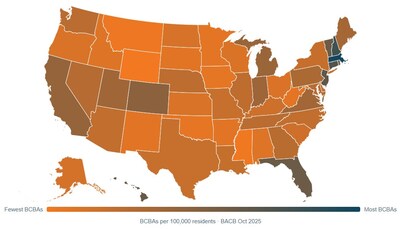
The Numbers: A Shortage of Historic Proportions
TYGES International’s behavioral health practice published a first-of-its-kind state-by-state analysis of BCBA workforce distribution, drawing on BACB certification data, CDC autism prevalence figures, and U.S. Census estimates. Download the report to discover the stark findings:
- 74,286 BCBAs currently practicing in the U.S.
- ~362,500 needed to meet conservative demand
- ~288,000 estimated shortage
- 1 in 31 children identified with autism spectrum disorder (CDC, 2022)
- ~2.9 million children and young adults under 21 are estimated to be on the autism spectrum
The state-by-state picture is equally alarming. Wyoming has just 7.5 BCBAs per 100,000 residents. Mississippi: 8.1. Montana: 8.5. Massachusetts leads at 55.1, nearly seven times more than the worst-served states. Even well-ranked states mask access gaps, as BCBAs cluster in urban centers while rural families go without care. Simply put, the United States has approximately five times fewer BCBAs than needed (under a conservative planning scenario of 8 clients per clinician).
“The map of autism care in this country doesn’t match where children actually live. We have pockets of access and vast stretches of nothing. That’s not a gap — it’s a system failure,” says Carol Zimmerman, Director of Behavioral Health Practice, TYGES International.
Closing the gap requires expanding BCBA training pipelines, improving clinician compensation and sustainability, removing telehealth policy barriers, and deploying specialized behavioral health recruiting to match talent to the communities that need it most. TYGES International’s behavioral health practice exists precisely for this purpose; placing qualified BCBAs in ABA clinics and autism service organizations nationwide.
Why This Matters
Early, intensive ABA therapy is among the most evidence-based treatments available for autism spectrum disorder. The research is clear: intervention during early childhood produces significantly better long-term outcomes in communication, adaptive behavior, and quality of life. Every month a child spends on a waiting list is a month inside that critical developmental window, gone.
Burnout, low reimbursement rates, and unsustainable caseloads are also pushing qualified clinicians out of direct practice. The TYGES analysis identifies these structural barriers as compounding factors that keep BCBA jobs unfilled even in communities with documented shortages.
What Must Change
“This isn’t a problem we can train our way out of alone. Compensation must reflect the complexity of this work, telehealth policies need to be reviewed and encouraged in care deserts, and organizations need recruiting partners who know how to place clinicians where families are waiting. All these levers must move at the same time,” says Zimmerman.
Expand training pipelines. Graduate programs, universities, and healthcare systems must increase BCBA training capacity and reduce the financial barriers to supervised fieldwork hours.
- Improve compensation and sustainability. Competitive pay, manageable caseloads, and strong clinical supervision infrastructure are essential to keeping BCBAs in the field.
- Remove telehealth barriers. Policy reform allowing broader telehealth delivery of ABA services can extend BCBA reach into rural and underserved areas where in-person providers simply don’t exist.
- Invest in targeted recruitment. Specialized search partners who understand behavioral health can connect qualified BCBAs to the clinics and communities that need them most, including the states at the bottom of the per-capita rankings.
About the Research
The TYGES International care desert analysis draws on data from the BACB, CDC, U.S. Census Bureau, and peer-reviewed ABA workforce research. The full report, including state-by-state tables, charts, and source citations, is publicly available at tyges.com.
TYGES International is a national executive search firm specializing in manufacturing, engineering, and supply chain recruiting, and behavioral health staffing with a focus on ABA therapy and BCBA placement. Learn more.

 View original content to download multimedia:https://www.prnewswire.com/news-releases/a-deficit-of-288-000-bcbas-leads-to-widespread-us-autism-care-shortages-302743522.html
SOURCE TYGES
 Disclaimer: The above press release comes to you under an arrangement with PR Newswire. We takes no editorial responsibility for the same.