
Integration Gaps Are Slowing AI and Digital Transformation Efforts, Finds Info-Tech Research Group


Growing AI investment and expanding SaaS ecosystems are exposing structural weaknesses in enterprise integration environments. Info-Tech Research Group’s latest findings indicate that integration complexity remains one of the most persistent barriers to scaling AI and accelerating digital transformation. The firm’s blueprint, Build an Enterprise Application Integration Strategy, outlines a structured framework to help enterprises formalize integration governance, reduce architectural fragility, and build scalable foundations for innovation.
ARLINGTON, Va., Feb. 19, 2026 /PRNewswire/ – Enterprises are rapidly expanding their application portfolios to support automation, analytics, and digital customer experiences. However, integration frequently evolves through reactive, point-to-point connections that create tightly coupled systems that are difficult to scale, monitor, and modernize. Insights from Info-Tech Research Group’s Build an Enterprise Application Integration Strategy blueprint show that this architectural drift constrains digital initiatives, increases operational risk, and limits the return on technology investments.
Rapid SaaS adoption and API-driven ecosystems are elevating integration from a technical concern to a strategic priority. When systems are loosely governed or inconsistently connected, organizations experience redundant data flows, inconsistent reporting, higher maintenance costs, and increased security exposure. Without clear architectural standards and enterprise ownership, integration models become fragile, slowing innovation instead of enabling it.
“Today, integration defines the pace of progress; it’s the invisible architecture behind every agile organisation,” says Ibrahim Abdel-Kader, Senior Research Analyst at Info-Tech Research Group. “Enterprise integration may not grab headlines, but it underpins true digital agility. With strong governance and a holistic approach, integration breaks down silos and technical debt, allowing firms to scale AI initiatives confidently and respond rapidly to new opportunities. The result is an IT ecosystem that’s flexible, secure, and primed for continuous innovation.”
Key Barriers to Enterprise Integration Maturity
Despite recognizing the importance of integration, many organizations struggle to operationalize it effectively. Info-Tech’s blueprint highlights several systemic barriers:
- Lack of enterprise ownership: Integration decisions are made at the project or department level without centralized governance or architectural standards.
- Overreliance on tightly coupled designs: Direct, synchronous connections create brittle dependencies that limit flexibility and increase failure risk.
- Accumulated technical debt: Years of ad hoc integrations increase maintenance overhead and restrict capacity for modernization.
- Insufficient lifecycle governance: Integration testing triggers are not consistently defined, increasing the likelihood of cascading failures after upgrades or structural changes.
- Security and compliance exposure: Weak logging controls and inconsistent data handling practices elevate regulatory and reputational risk.
Info-Tech’s Framework for Enterprise Application Integration Discipline
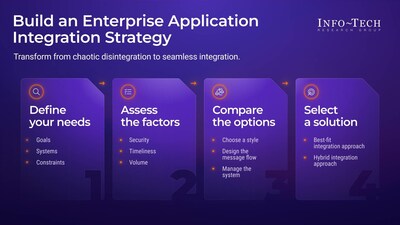
In the Build an Enterprise Application Integration Strategy blueprint, Info-Tech outlines a structured approach to help organizations shift from reactive system connections to a governed enterprise capability. The resource guides CIOs, enterprise architects, and IT leadership teams through the following four defined stages:
- Define Integration Needs
CIOs and business process owners clarify enterprise goals, identify the systems involved, and document technical and operational constraints. By defining integration requirements in business terms first, leaders ensure initiatives support measurable outcomes rather than isolated technical fixes. - Assess Integration Factors
Enterprise architects and IT security leaders evaluate critical design considerations, including security requirements, data timeliness expectations, and transaction volume. This assessment ensures integration decisions reflect risk exposure, performance demands, and scalability requirements. - Compare Integration Options
Integration architects and technical teams evaluate architectural approaches by selecting integration styles, designing message flows, and determining how systems will be governed. Structured comparison reduces long-term complexity and prevents fragmented growth. - Select the Right Integration Approach
IT leadership selects the best-fit integration model, whether centralized, decentralized, or hybrid, based on defined needs and assessed factors. A deliberate selection process ensures that the chosen approach supports flexibility, governance, and future modernization initiatives.
By formalizing integration as a governed enterprise capability rather than a collection of isolated projects, organizations can reduce system fragility, improve integration deployment velocity, and create a connected technology ecosystem that supports AI scalability and long-term modernization.
Info-Tech’s Build an Enterprise Application Integration Strategy blueprint includes an integration strategy toolkit that supports use case identification, guiding principle development, integration pattern selection, and testing governance design. By applying the firm’s methodology, CIOs and enterprise architects can transform integration from architectural debt into a strategic enabler of digital resilience and growth.
For exclusive and timely commentary from Info-Tech’s experts, including Ibrahim Abdel-Kader, and access to the complete Build an Enterprise Application Integration Strategy blueprint, please contact pr@infotech.com.
About Info-Tech Research Group
Info-Tech Research Group is one of the world’s leading and fastest-growing research and advisory firms, serving over 30,000 IT, HR, and marketing professionals around the globe. As a trusted product and service leader, the company delivers unbiased, highly relevant research and industry-leading advisory support to help leaders make strategic, timely, and well-informed decisions. For nearly 30 years, Info-Tech has partnered closely with teams to provide everything they need, from actionable tools to expert guidance, ensuring they deliver measurable results for their organizations.
To learn more about Info-Tech’s HR research and advisory services, visit McLean & Company, and for data-driven software buying insights and vendor evaluations, visit the firm’s SoftwareReviews platform.
Media professionals can register for unrestricted access to research across IT, HR, and software, and hundreds of industry analysts through the firm’s Media Insiders program. To gain access, contact pr@infotech.com.
For information about Info-Tech Research Group or to access the latest research, visit infotech.com and connect via LinkedIn and X.

 View original content to download multimedia:https://www.prnewswire.com/news-releases/integration-gaps-are-slowing-ai-and-digital-transformation-efforts-finds-info-tech-research-group-302692867.html
SOURCE Info-Tech Research Group
 Disclaimer: The above press release comes to you under an arrangement with PR Newswire. We takes no editorial responsibility for the same.